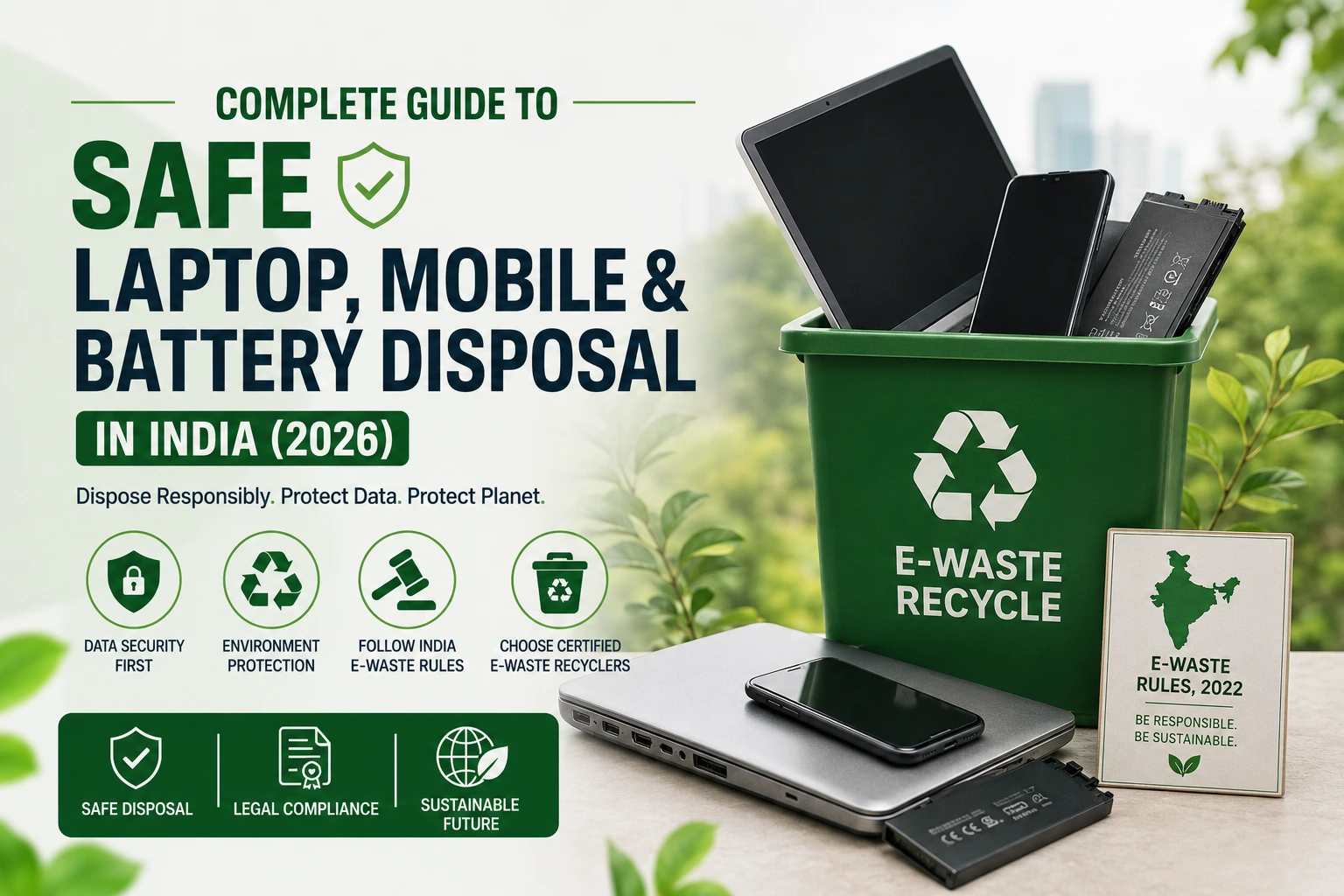
As technology evolves rapidly, millions of laptops, smartphones, tablets, and batteries become obsolete every year. Unfortunately, a significant portion of this electronic waste ends up in landfills, causing serious environmental and health hazards. Safe laptop, mobile, and battery disposal in India has become more important than ever in 2026 due to increasing digital adoption and stricter e-waste management regulations.
Whether you’re upgrading your smartphone, replacing an old laptop, or disposing of damaged batteries, understanding the correct disposal process helps protect the environment while ensuring compliance with Indian e-waste laws. In this comprehensive guide, we’ll explain everything you need to know about responsible electronic waste disposal and recycling.
What Is E-Waste?
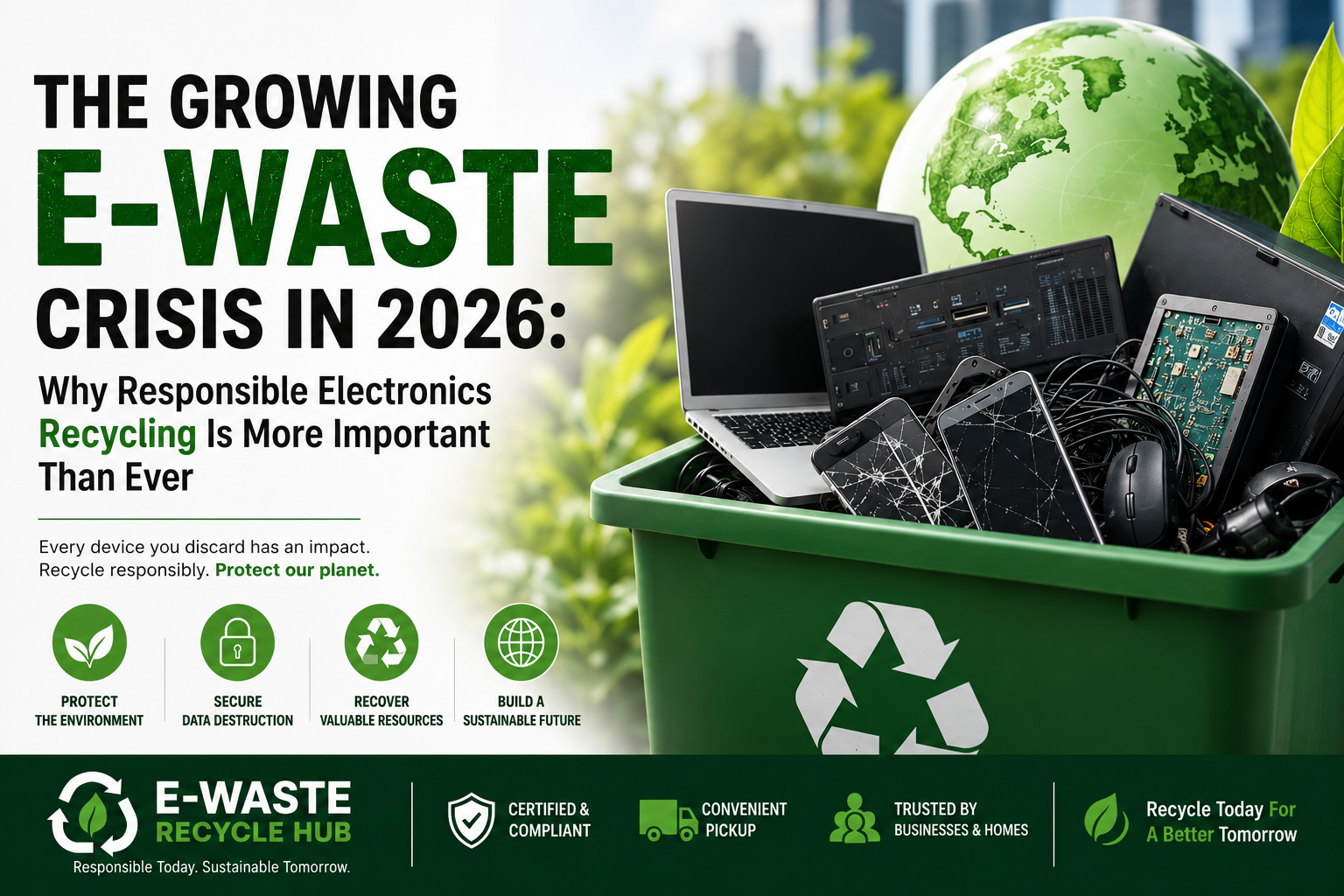
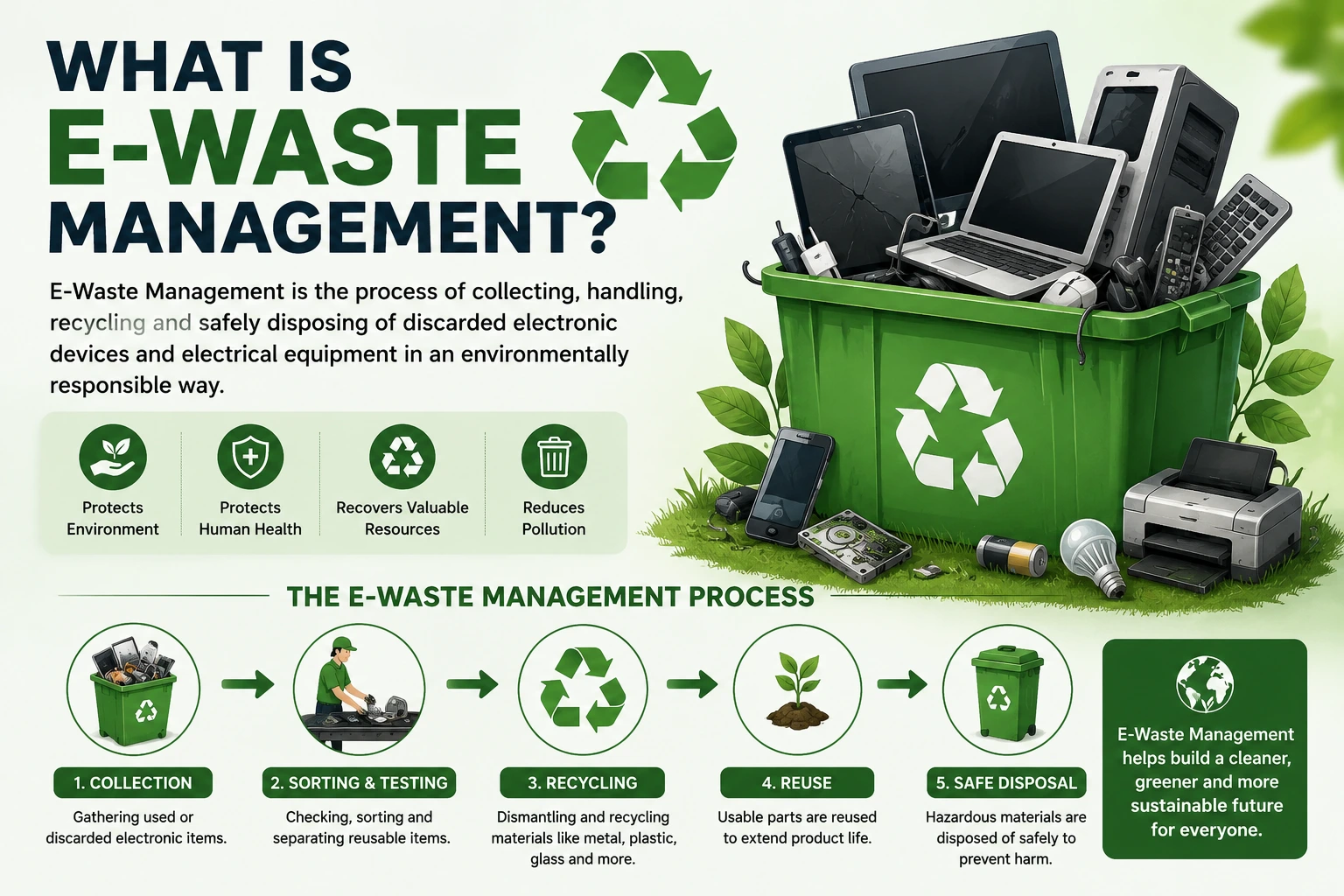
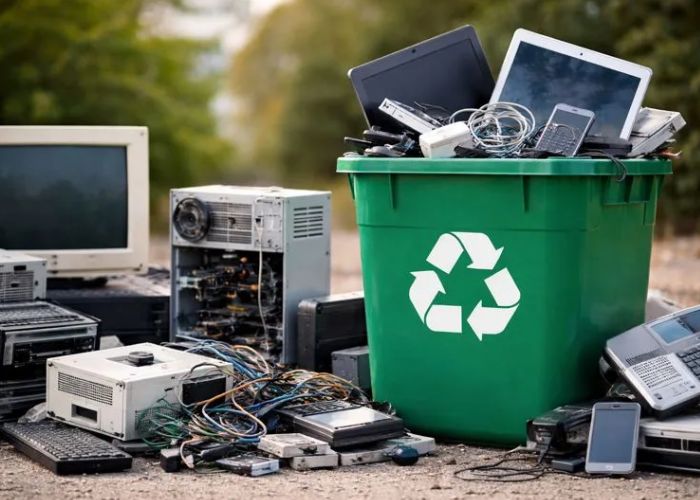
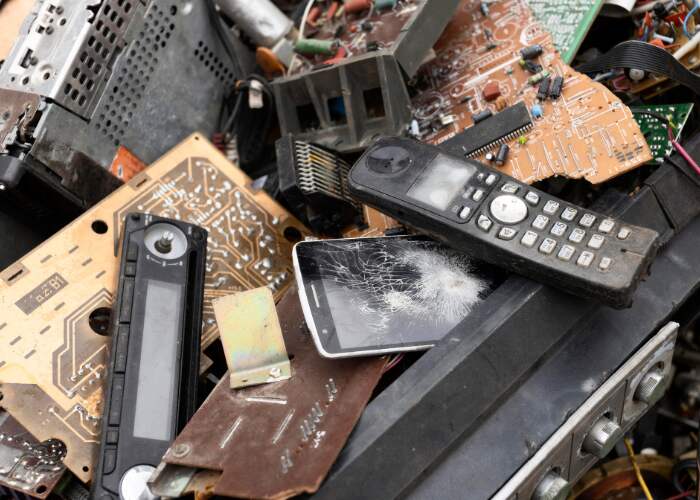
Electronic waste, commonly known as e-waste, refers to discarded electronic devices and components that have reached the end of their useful life.
Common examples include:
- Laptops and computers
- Mobile phones and tablets
- Power banks
- Lithium-ion batteries
- Chargers and cables
- Printers and scanners
- Electronic accessories
According to global environmental reports, e-waste is one of the fastest-growing waste streams worldwide, generating over 60 million metric tonnes annually. Proper recycling and disposal are essential to reduce environmental damage and recover valuable materials.
Why Safe Disposal of Electronics Matters
Environmental Protection
Electronic devices contain hazardous materials such as:
- Lead
- Mercury
- Cadmium
- Chromium
- Lithium
When improperly discarded, these substances can contaminate soil, groundwater, and air.
Human Health Safety
Informal recycling practices often expose workers and nearby communities to toxic chemicals. Long-term exposure may lead to respiratory issues, neurological disorders, and other health complications.
Resource Recovery
Modern electronics contain valuable materials including:
| Material | Common Use |
|---|---|
| Gold | Circuit boards |
| Silver | Electronic connectors |
| Copper | Wiring |
| Aluminum | Device frames |
| Lithium | Rechargeable batteries |
Recycling helps recover these materials and reduces the need for mining new resources.
Safe Laptop Disposal in India
How to Dispose of an Old Laptop Safely
Before recycling or disposing of your laptop, follow these steps:
1. Back Up Important Data
Transfer documents, photos, and files to:
- External hard drives
- Cloud storage
- New devices
2. Wipe Personal Information
Factory reset alone may not completely remove sensitive information.
Use certified data-erasure software to:
- Delete personal files
- Remove stored passwords
- Erase financial information
- Protect business data
3. Remove External Accessories
Separate:
- Chargers
- Mouse devices
- USB drives
- Docking stations
These may require separate recycling procedures.
4. Choose an Authorized E-Waste Recycler
Always use certified e-waste recycling services that follow government-approved environmental practices.
Mobile Phone Disposal Guide
What Should You Do Before Recycling a Smartphone?
Most smartphones contain personal information, making secure disposal critical.
Follow these steps:
- Back up your data.
- Remove SIM cards.
- Remove memory cards.
- Sign out of accounts.
- Perform a factory reset.
- Use secure data-erasure tools when possible.
Can Mobile Phones Be Recycled?
Yes. Many smartphone components can be recovered and reused, including:
- Precious metals
- Plastics
- Glass components
- Circuit boards
Recycling one million mobile phones can recover substantial quantities of gold, silver, copper, and palladium.
Battery Disposal in India: What You Need to Know
Why Batteries Require Special Handling
Batteries are among the most hazardous forms of electronic waste.
Improper disposal can cause:
- Fires
- Explosions
- Chemical leaks
- Soil contamination
- Water pollution
Common Battery Types
| Battery Type | Common Devices |
| Lithium-ion | Smartphones, laptops |
| Nickel-Metal Hydride | Cameras, electronics |
| Lead-Acid | UPS systems, vehicles |
| Lithium Polymer | Tablets, drones |
How to Dispose of Batteries Safely
Store Batteries Properly
Before disposal:
- Keep batteries in a cool, dry location.
- Avoid puncturing or crushing them.
- Cover exposed terminals with tape.
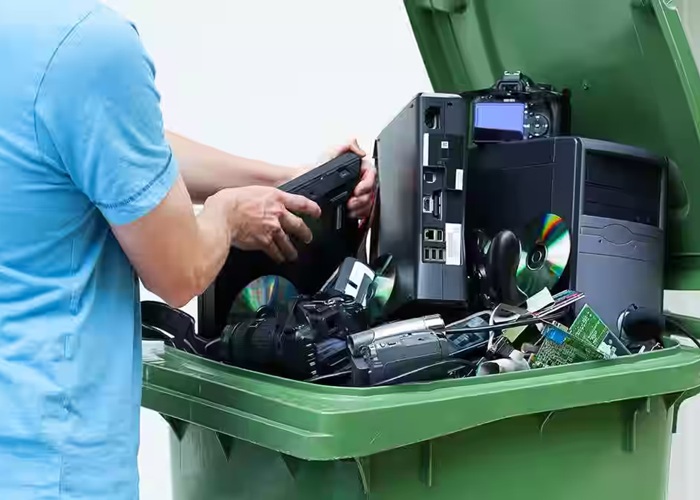
Never Throw Batteries in Household Waste
Mixing batteries with regular garbage increases environmental and safety risks.
Use Authorized Collection Centers
Always hand over batteries to certified recycling facilities or approved collection programs.
Indian E-Waste Management Rules in 2026
Understanding E-Waste Regulations
India has strengthened its e-waste management framework to address growing electronic waste volumes.
Key objectives include:
- Extended Producer Responsibility (EPR)
- Improved recycling rates
- Responsible waste collection
- Environmental protection
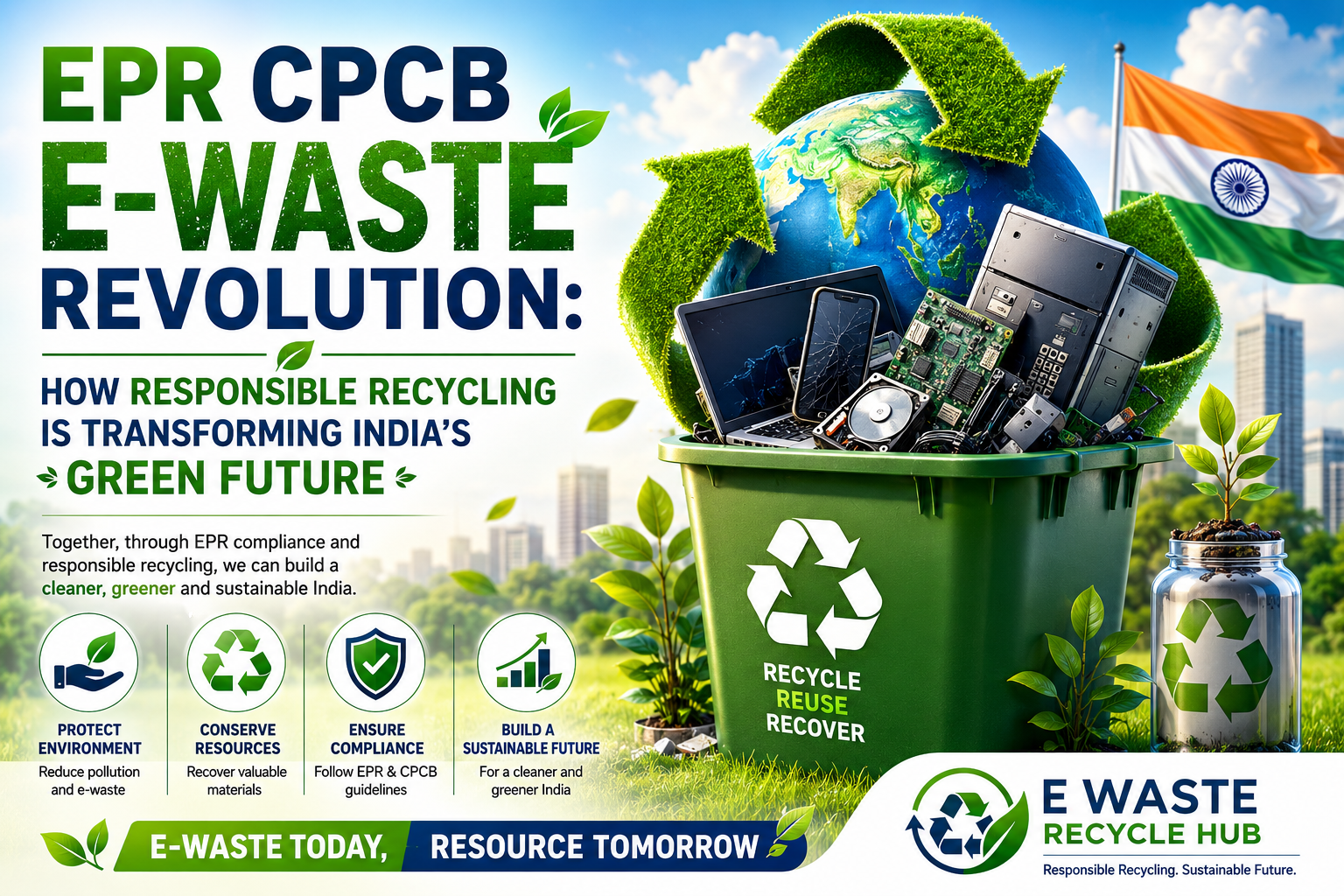
What Is Extended Producer Responsibility (EPR)?
EPR requires manufacturers and producers to take responsibility for collecting and recycling electronic products after consumer use.
Benefits include:
- Increased recycling efficiency
- Reduced landfill waste
- Better environmental outcomes
Consumers can contribute by choosing authorized disposal channels.
Signs That Your Device Should Be Recycled
Laptop Warning Signs
- Frequent hardware failures
- Battery swelling
- Outdated operating systems
- Excessive repair costs
- Physical damage
Mobile Phone Warning Signs
- Cracked screens beyond repair
- Poor battery performance
- Inability to update software
- Persistent technical issues
Battery Warning Signs
- Swelling
- Overheating
- Leakage
- Reduced charging capacity
If any of these issues occur, recycle the device promptly.
Benefits of Choosing Professional E-Waste Recycling Services
Data Security
Professional recyclers ensure:
- Secure data destruction
- Compliance with privacy standards
- Protection against identity theft
Environmental Compliance
Certified recyclers follow:
- Government regulations
- Safe dismantling procedures
- Hazardous waste management protocols
Resource Conservation
Responsible recycling supports:
- Circular economy initiatives
- Material recovery
- Reduced environmental impact
How Businesses Can Manage Electronic Waste Responsibly
Organizations generate substantial amounts of electronic waste through:
- Computer upgrades
- Server replacements
- Mobile device replacements
- IT asset disposal
Best practices include:
- Maintaining e-waste inventories
- Scheduling periodic recycling drives
- Partnering with certified recyclers
- Ensuring secure data destruction
- Tracking recycling certificates
Responsible e-waste management also enhances corporate sustainability initiatives.
Why Choose EWasteRecycleHub for Responsible E-Waste Disposal?
At ewasterecyclehub, we understand the importance of secure and environmentally responsible e-waste recycling. Whether you need laptop disposal, mobile phone recycling, or battery recycling solutions, our team follows industry best practices to ensure safe collection, processing, and recycling.
Our commitment includes:
- Responsible recycling methods
- Data security support
- Environmentally compliant processes
- Sustainable waste management solutions
- Support for individuals and businesses
By choosing ewasterecyclehub, you contribute to a cleaner and more sustainable future while ensuring your electronic waste is handled responsibly.
Conclusion
Safe laptop, mobile & battery disposal in India is no longer optional—it is a critical responsibility for individuals, businesses, and organizations. Proper e-waste recycling prevents environmental pollution, protects public health, conserves valuable resources, and supports India’s sustainability goals.
Before discarding any electronic device, take the time to back up data, securely erase personal information, and use authorized recycling channels. With trusted recycling partners like ewasterecyclehub, disposing of electronic waste becomes simple, secure, and environmentally responsible.
Ready to Recycle Your Electronic Waste?
Contact ewasterecyclehub today for safe, compliant, and eco-friendly laptop, mobile phone, and battery disposal solutions. Together, we can reduce e-waste and build a greener future for India.
-

The Growing E-Waste Crisis in 2026: Why Responsible Electronics Recycling Is More Important Than Ever
August 3, 2026 -
AI-Powered E-Waste Recycling in 2026: How Smart Technology is Revolutionizing Electronic Waste Management
July 7, 2026 -
EPR CPCB E-Waste Revolution: How Responsible Recycling is Transforming India’s Green Future
June 15, 2026 -
Complete Guide to Safe Laptop, Mobile & Battery Disposal in India (2026)
June 3, 2026 -
What is E-Waste Management and Why is It Important?
May 6, 2026 -
EPR for E-Waste: Rules, Registration Process & Compliance Guide for Producers
March 3, 2026 -
The Growing Problem of Electronic Waste and the Need for Responsible Recycling
January 12, 2026 -
How Proper E-Waste Recycling Helps Protect the Environment and Human Health
December 16, 2025 -
E-Waste Management in India: Challenges, Solutions, and Future Scope
December 11, 2025 -
Secure Data Destruction: Protecting Your Privacy While Recycling
November 24, 2025 -
How Recycling E-Waste Management Helps Protect the Environment
November 6, 2025 -
Secure Computer Data Destruction: Everything You Need to Know
September 3, 2025 -
Top 10 Electronics You Didn’t Know You Could Recycle
August 26, 2025 -
EPR CPCB E-Waste: A Complete Guide to Responsible Electronics Recycling
August 19, 2025 -
Best IT Recycling Solutions for Businesses
August 12, 2025 -
2025 EPR Rules for E-Waste: How to Stay Compliant and Avoid Penalties
August 5, 2025 -
E-Waste Management: Solutions for Electric Waste Disposal
July 30, 2025 -
What Are The Ways To Efficiently Manage Commercial Waste For Businesses?
July 24, 2025 -
How to Fulfill Your E-Waste EPR Compliance in 2025
July 15, 2025 -
Corporate Responsibility: Implementing Sustainable E-Waste Management
May 28, 2024 -
Making Greener Choices: Exploring the Benefits of Refurbished Electronics
May 28, 2024 -
The Environmental Impact of E-Waste: Understanding the Need for Responsible Recycling
May 28, 2024 -
How to Properly Dispose of Your Old Electronics: A Step-by-Step Guide
May 27, 2024 -
E-Waste Recycling: A Step-by-Step Guide for Responsible Disposal
May 27, 2024