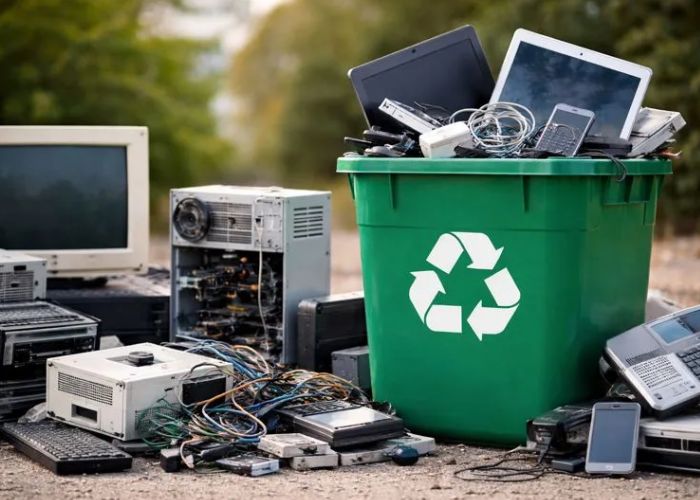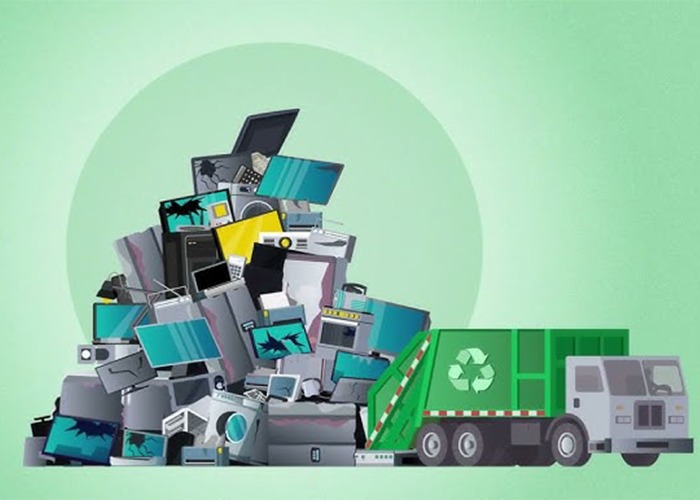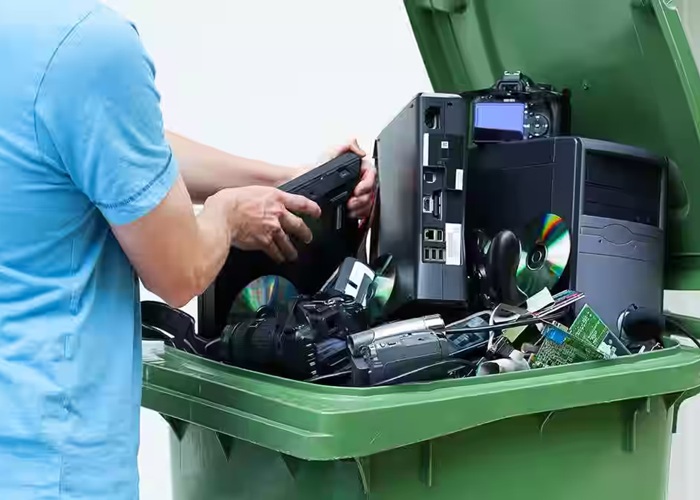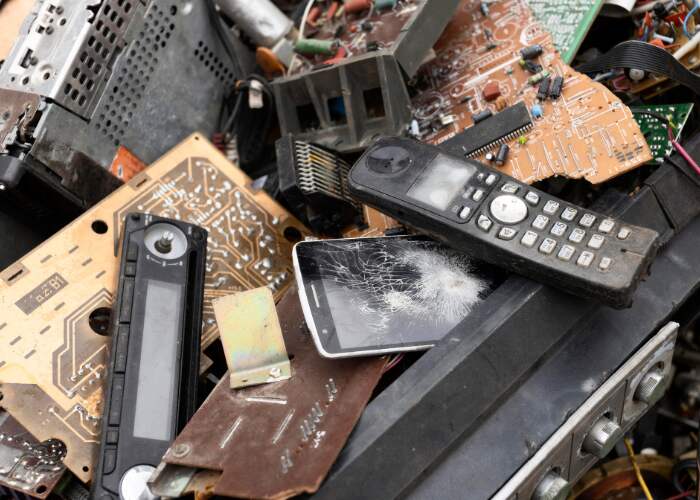
The world is generating more electronic waste than ever before. Every year, millions of smartphones, laptops, televisions, batteries, and household appliances reach the end of their life cycle. As technology evolves rapidly, electronic devices become obsolete faster, creating a significant environmental challenge.
Traditional recycling methods have helped reduce waste, but they often struggle with increasing volumes and the complexity of modern electronic products. In 2026, Artificial Intelligence (AI), robotics, and smart automation are transforming the e-waste recycling industry by making recycling faster, safer, and more efficient.
In this article, we’ll explore how AI-powered e-waste recycling is shaping the future of sustainable waste management and why it matters for businesses, governments, and consumers.
What Is AI-Powered E-Waste Recycling?
AI-powered e-waste recycling refers to the use of Artificial Intelligence, machine learning, robotics, computer vision, and smart sensors to identify, sort, process, and recover valuable materials from discarded electronic devices.
Instead of relying entirely on manual labor, intelligent systems can automatically recognize different electronic components and separate them with remarkable speed and accuracy.
This technology improves recycling efficiency while reducing operational costs and environmental impact.
Why the World Needs Smarter E-Waste Recycling
Electronic waste is one of the fastest-growing waste streams globally.
Common e-waste includes:
- Smartphones
- Computers
- Laptops
- Tablets
- TVs
- Printers
- Batteries
- Cables
- Networking equipment
- Household electronics
Many electronic devices contain valuable materials such as:
- Gold
- Silver
- Copper
- Aluminum
- Palladium
- Rare earth elements
When electronics are improperly disposed of, toxic substances like lead, mercury, and cadmium can contaminate soil and water, posing risks to human health and the environment.
AI-powered recycling helps recover these valuable resources while reducing pollution and conserving natural resources.
How Artificial Intelligence Is Transforming E-Waste Recycling
1. Intelligent Waste Identification
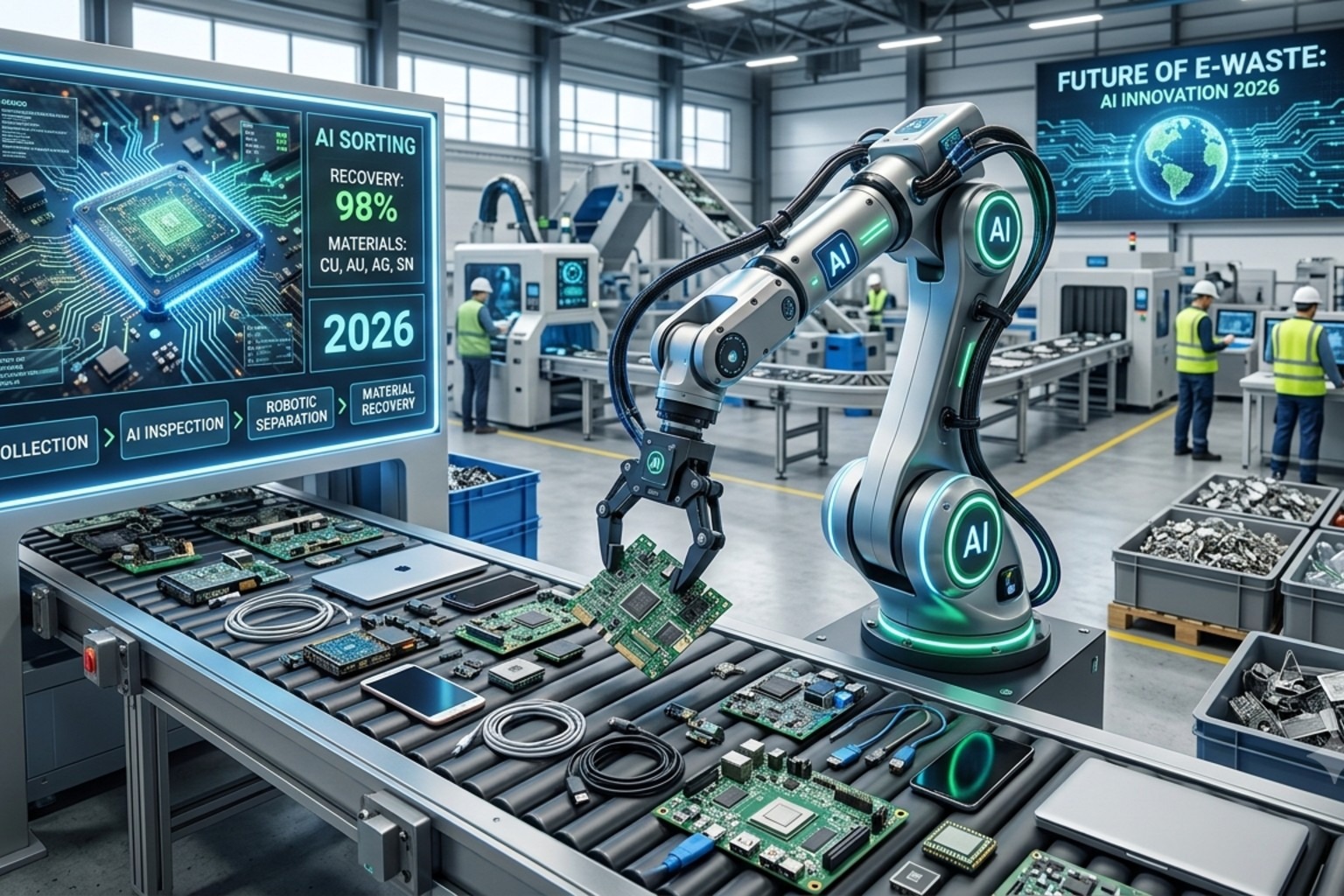
AI systems use high-resolution cameras and computer vision technology to identify electronic products on conveyor belts within milliseconds.
The software can distinguish between:
- Circuit boards
- Plastic components
- Batteries
- Copper wires
- Mobile phones
- Laptop components
This significantly improves sorting accuracy.
2. Automated Robotic Sorting
Modern recycling facilities now use robotic arms equipped with AI algorithms.
These robots can:
- Pick electronic components
- Separate hazardous materials
- Identify reusable parts
- Increase processing speed
- Reduce workplace injuries
Automation allows recycling plants to process thousands of electronic items daily with minimal errors.
3. Machine Learning Improves Over Time
Unlike traditional machines, AI systems continuously learn from new data.
Every recycled product helps improve the algorithm’s ability to identify:
- Different brands
- Device models
- Material compositions
- Recyclable components
This makes recycling increasingly efficient over time.
4. Smart Material Recovery
Recovering precious metals from electronic devices is one of the biggest challenges in recycling.
AI helps determine the best recovery process for:
- Gold
- Silver
- Copper
- Lithium
- Cobalt
- Nickel
This increases recovery rates while reducing waste.
5. Predictive Maintenance
AI also monitors recycling equipment.
Smart sensors can predict:
- Equipment failures
- Maintenance schedules
- Production efficiency
- Energy consumption
This minimizes downtime and improves operational performance.
The Role of Robotics in E-Waste Recycling
Robots have become essential in modern recycling facilities.
They perform repetitive tasks with exceptional precision, including:
- Device dismantling
- Battery removal
- Component separation
- Material sorting
- Hazardous waste handling
By reducing manual handling, robotics also improve worker safety.
IoT Is Making Recycling Smarter
The Internet of Things (IoT) enables connected recycling systems.
Smart sensors monitor:
- Waste collection bins
- Recycling containers
- Processing equipment
- Transportation routes
Benefits include:
- Real-time tracking
- Reduced fuel consumption
- Faster collection schedules
- Improved operational efficiency
Digital Product Passports: A Growing Trend
Manufacturers are increasingly exploring Digital Product Passports (DPPs), which store detailed information about electronic products, including:
- Materials used
- Repair history
- Component details
- Recycling instructions
When recycling facilities access this information, AI systems can process products more efficiently and recover valuable materials with greater accuracy.
Environmental Benefits of AI-Based Recycling
AI-powered recycling contributes to sustainability by:
- Reducing landfill waste
- Conserving natural resources
- Lowering greenhouse gas emissions
- Recovering valuable metals
- Reducing illegal dumping
- Supporting the circular economy
Every recycled electronic device helps reduce the need for new mining activities.
Business Benefits of Smart E-Waste Recycling
Companies adopting AI recycling technologies can benefit from:
Higher Recovery Rates
Advanced sorting increases the recovery of valuable metals.
Lower Operating Costs
Automation reduces labor-intensive processes.
Better Regulatory Compliance
Businesses can meet environmental regulations more effectively.
Improved Customer Trust
Consumers increasingly prefer environmentally responsible organizations.
Greater Operational Efficiency
AI reduces errors while increasing productivity.
Challenges Facing AI-Powered Recycling
Despite its advantages, several challenges remain.
These include:
- High initial investment costs
- Complex AI implementation
- Skilled workforce requirements
- Data management
- Continuous software updates
- Infrastructure development
However, as technology becomes more affordable, adoption is expected to increase worldwide.
What the Future Looks Like
The future of e-waste recycling is becoming increasingly intelligent.
Emerging innovations include:
- Fully autonomous recycling facilities
- AI-driven dismantling robots
- Blockchain-based waste tracking
- Digital Product Passports
- Smart recycling bins
- Advanced metal recovery systems
These technologies will help create a more sustainable and circular electronics economy.
How Consumers Can Support Smart Recycling
Individuals also play an important role.
You can help by:
- Recycling old electronics responsibly.
- Donating working devices.
- Purchasing repairable products.
- Extending device life through maintenance.
- Using certified e-waste recycling services.
- Avoiding illegal disposal.
Small actions from millions of people can make a significant environmental difference.
Why Businesses and Households Trust E-Waste Recycle Hub
As technology continues to evolve, choosing a reliable recycling partner is just as important as choosing the right electronic devices. At E-Waste Recycle Hub, we are committed to helping individuals, businesses, educational institutions, and organizations dispose of electronic waste safely, securely, and responsibly.
Our mission is to make e-waste recycling simple while protecting the environment through sustainable recycling practices. We understand that outdated electronics can contain valuable materials as well as sensitive data. That’s why we focus on environmentally responsible recycling processes that support resource recovery and help reduce the amount of electronic waste sent to landfills.
Whether you are replacing office computers, upgrading your IT infrastructure, or simply looking to recycle old household electronics, E-Waste Recycle Hub provides dependable e-waste recycling solutions tailored to your needs.
Our E-Waste Recycling Solutions
We accept and responsibly recycle a wide range of electronic items, including:
- Desktop Computers
- Laptops and MacBooks
- Mobile Phones and Tablets
- Servers and Data Center Equipment
- Networking Devices
- Printers and Scanners
- Monitors and Displays
- Hard Drives and Storage Devices
- Batteries
- Office Electronic Equipment
- Consumer Electronics
Why Choose E-Waste Recycle Hub?
When you choose E-Waste Recycle Hub, you benefit from:
- Environmentally responsible e-waste recycling practices
- Safe handling of electronic waste
- Support for businesses and residential customers
- Responsible recovery of valuable recyclable materials
- Reduced environmental impact through sustainable recycling
- A commitment to promoting a cleaner, greener future
Our team believes that every electronic device recycled correctly contributes to a healthier planet. By working together, we can reduce pollution, conserve natural resources, and support a circular economy where valuable materials are reused instead of wasted.
If you’re looking for a trusted partner to recycle your unwanted electronics, E-Waste Recycle Hub is here to help. We are dedicated to making electronic waste recycling convenient, responsible, and environmentally sustainable for everyone.
Conclusion
Artificial Intelligence is transforming the way electronic waste is managed. From intelligent sorting systems and robotic dismantling to predictive maintenance and smart material recovery, AI is making recycling faster, cleaner, and more efficient.
As electronic waste continues to grow, adopting advanced recycling technologies will be essential for protecting the environment, conserving valuable resources, and supporting a sustainable circular economy.
At E-Waste Recycle Hub, we are proud to support responsible electronic waste recycling by helping individuals and businesses recycle their unwanted electronics safely and sustainably. Whether you’re disposing of a single device or managing large-scale IT asset replacement, our goal is to provide reliable e-waste recycling solutions that protect both your data and the environment. Contact E-Waste Recycle Hub today and join us in building a cleaner, greener, and more sustainable future.
Frequently Asked Questions
What is AI-powered e-waste recycling?
AI-powered e-waste recycling uses artificial intelligence, robotics, and machine learning to identify, sort, and process discarded electronic devices more efficiently than traditional methods.
Why is AI important in electronic waste management?
AI improves sorting accuracy, increases material recovery, reduces operational costs, enhances worker safety, and minimizes environmental impact.
What materials can be recovered from e-waste?
Electronic waste contains valuable materials such as gold, silver, copper, aluminum, lithium, cobalt, nickel, palladium, and rare earth elements.
How do robots help in e-waste recycling?
Robots automate dismantling, sorting, battery removal, and hazardous material handling, improving efficiency and reducing workplace risks.
What is the future of AI in recycling?
Future developments include autonomous recycling plants, AI-powered robots, Digital Product Passports, blockchain tracking, and smarter resource recovery systems.
-

The Growing E-Waste Crisis in 2026: Why Responsible Electronics Recycling Is More Important Than Ever
August 3, 2026 -
AI-Powered E-Waste Recycling in 2026: How Smart Technology is Revolutionizing Electronic Waste Management
July 7, 2026 -
EPR CPCB E-Waste Revolution: How Responsible Recycling is Transforming India’s Green Future
June 15, 2026 -
Complete Guide to Safe Laptop, Mobile & Battery Disposal in India (2026)
June 3, 2026 -
What is E-Waste Management and Why is It Important?
May 6, 2026 -
EPR for E-Waste: Rules, Registration Process & Compliance Guide for Producers
March 3, 2026 -
The Growing Problem of Electronic Waste and the Need for Responsible Recycling
January 12, 2026 -
How Proper E-Waste Recycling Helps Protect the Environment and Human Health
December 16, 2025 -
E-Waste Management in India: Challenges, Solutions, and Future Scope
December 11, 2025 -
Secure Data Destruction: Protecting Your Privacy While Recycling
November 24, 2025 -
How Recycling E-Waste Management Helps Protect the Environment
November 6, 2025 -
Secure Computer Data Destruction: Everything You Need to Know
September 3, 2025 -
Top 10 Electronics You Didn’t Know You Could Recycle
August 26, 2025 -
EPR CPCB E-Waste: A Complete Guide to Responsible Electronics Recycling
August 19, 2025 -
Best IT Recycling Solutions for Businesses
August 12, 2025 -
2025 EPR Rules for E-Waste: How to Stay Compliant and Avoid Penalties
August 5, 2025 -
E-Waste Management: Solutions for Electric Waste Disposal
July 30, 2025 -
What Are The Ways To Efficiently Manage Commercial Waste For Businesses?
July 24, 2025 -
How to Fulfill Your E-Waste EPR Compliance in 2025
July 15, 2025 -
Corporate Responsibility: Implementing Sustainable E-Waste Management
May 28, 2024 -
Making Greener Choices: Exploring the Benefits of Refurbished Electronics
May 28, 2024 -
The Environmental Impact of E-Waste: Understanding the Need for Responsible Recycling
May 28, 2024 -
How to Properly Dispose of Your Old Electronics: A Step-by-Step Guide
May 27, 2024 -
E-Waste Recycling: A Step-by-Step Guide for Responsible Disposal
May 27, 2024